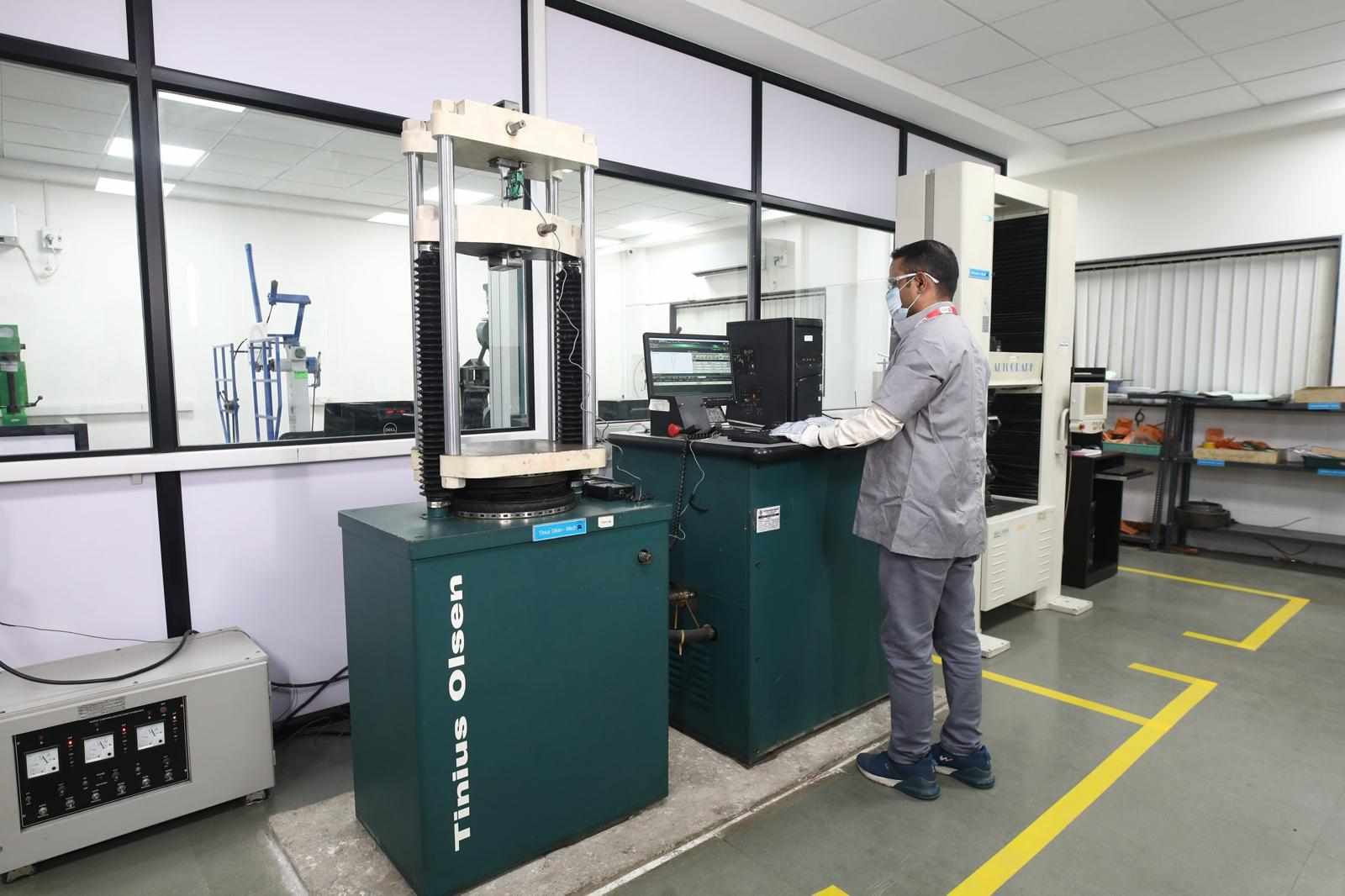
Ensuring the structural integrity of heavy-duty lifting equipment and structural components is a cornerstone of industrial safety.1 As of 2026, the demand for precision, transparency, and high-capacity verification has led to significant advancements in the design and application of a proof test bed. These systems are no longer just massive steel frames; they are now sophisticated, data-driven platforms integrated with hydraulic power and digital monitoring to provide a definitive "pass" or "fail" for critical assets.
The Critical Role of Load Verification
In the context of modern engineering, a proof test bed serves as a non-destructive gateway for equipment entering or returning to service.2 The primary objective is to apply a specific load—often 1.5 to 2 times the standard working load limit (WLL)—to verify that a component will not suffer from permanent deformation or structural failure.3 This process is vital for items such as wire rope slings, anchor points, shackles, and spreader beams.4
Industry standards like ISO, ASME B30, and ASTM E4 dictate the frequency and methodology of these tests. Without a reliable proof test bed, identifying microscopic material fatigue or manufacturing defects becomes a matter of guesswork, which is unacceptable in high-stakes environments like offshore drilling, bridge construction, or aerospace manufacturing.
Technological Advancements in 2026
The current year has seen a shift toward "smart" testing environments.5 Modern systems now incorporate features that prioritize both accuracy and operator safety:
Wireless Data Logging: Technicians no longer need to stand adjacent to high-tension zones. Bluetooth-enabled load cells transmit real-time stress-strain data to remote tablets, allowing for a safer testing perimeter.
Modular Hydraulic Control: Advanced hydraulic power units now offer incremental loading capabilities. This prevents "shock loading," which can damage the specimen being tested, ensuring a smooth transition from zero to peak force.
Automated Certification: Integrated software now generates digital compliance certificates instantly.7 These documents include a full graph of the load cycle, time-stamps, and calibration data, providing an immutable audit trail for insurance and regulatory bodies.
Design and Configuration
Industrial facilities typically choose between horizontal and vertical configurations depending on the geometry of the items being tested.8
Ensuring the structural integrity of heavy-duty lifting equipment and structural components is a cornerstone of industrial safety.1 As of 2026, the demand for precision, transparency, and high-capacity verification has led to significant advancements in the design and application of a proof test bed. These systems are no longer just massive steel frames; they are now sophisticated, data-driven platforms integrated with hydraulic power and digital monitoring to provide a definitive "pass" or "fail" for critical assets.
The Critical Role of Load Verification
In the context of modern engineering, a proof test bed serves as a non-destructive gateway for equipment entering or returning to service.2 The primary objective is to apply a specific load—often 1.5 to 2 times the standard working load limit (WLL)—to verify that a component will not suffer from permanent deformation or structural failure.3 This process is vital for items such as wire rope slings, anchor points, shackles, and spreader beams.
Industry standards like ISO, ASME B30, and ASTM E4 dictate the frequency and methodology of these tests. Without a reliable proof test bed, identifying microscopic material fatigue or manufacturing defects becomes a matter of guesswork, which is unacceptable in high-stakes environments like offshore drilling, bridge construction, or aerospace manufacturing.
Technological Advancements in 2026
The current year has seen a shift toward "smart" testing environments.5 Modern systems now incorporate features that prioritize both accuracy and operator safety:
Wireless Data Logging: Technicians no longer need to stand adjacent to high-tension zones. Bluetooth-enabled load cells transmit real-time stress-strain data to remote tablets, allowing for a safer testing perimeter.
Modular Hydraulic Control: Advanced hydraulic power units now offer incremental loading capabilities. This prevents "shock loading," which can damage the specimen being tested, ensuring a smooth transition from zero to peak force.
Automated Certification: Integrated software now generates digital compliance certificates instantly.7 These documents include a full graph of the load cycle, time-stamps, and calibration data, providing an immutable audit trail for insurance and regulatory bodies.
Design and Configuration
Industrial facilities typically choose between horizontal and vertical configurations depending on the geometry of the items being tested.
Safety Protocols and Environmental Factors
Safety remains the top priority during any load verification procedure.9Modern machines are equipped with heavy-duty protective cages or ballistic shielding to contain potential energy in the event of a specimen failure. Furthermore, sustainability is becoming a key factor in 2026.10 Many new systems utilize biodegradable hydraulic fluids and energy-efficient motors to reduce the environmental footprint of large-scale industrial testing labs.
By utilizing these advanced systems, businesses can ensure that every piece of hardware is fit for purpose. This dedication to verification not only protects the lives of the workforce but also safeguards the longevity of expensive industrial assets.11


Write a comment ...